

By Jacobs Financial Services Editorial Team ·
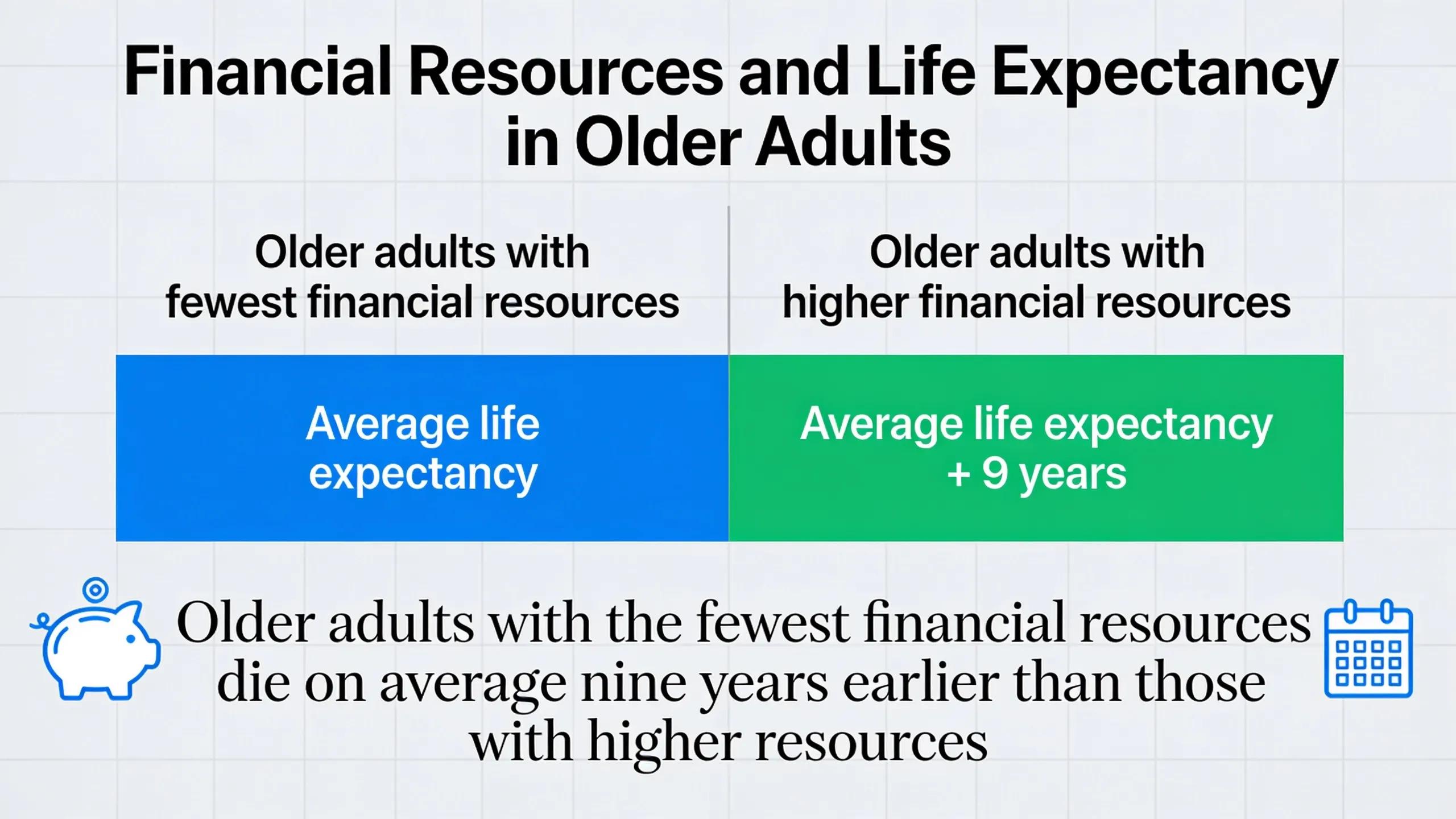
Recent research shows one in five people now live beyond age 90. Low-income older adults die nine years earlier than wealthier peers, per National Council on Aging findings. These trends underscore why longevity risk and health costs demand protection-focused planning. Jacobs Financial Services builds retirement strategies through its Retirement Income Planning Strategies for Financial Security, safeguarding assets against market risk and inflation.
One in five people live beyond age 90, fundamentally reshaping retirement planning and longevity risk management strategies.
Low-income older adults die nine years earlier than wealthy counterparts, according to the National Council on Aging.
Retirement transitions from passive withdrawal to an active life stage where people prioritize social engagement and continued purpose.
The Society of Actuaries researches pooled lifetime income products to address retirement security gaps for aging populations.
Longevity extends the number of years a nest egg must stretch. One in five retirees today can expect to live past age 90, according to aging research on healthy retirement outcomes. That reality reshapes how much income a retirement plan needs to generate, and for how long.
Retirement now represents an active chapter rather than a quiet conclusion. Clients now describe it as an active chapter filled with community involvement, part-time work, and continued purpose. Retirement research on modern aging confirms this shift: retirees stay socially connected and often keep working in some capacity well into their later years.
Retirement sits at the crossroads of wealth and health. A healthy body allows retirees to actually use the income they’ve saved. Poor health can quietly drain resources meant for travel, hobbies, or family time. Financial studies on retirement security stress that financial planning and health maintenance work together, not separately.
Longer lifespans demand strategies built for decades, not years. Jacobs Financial Services designs plans that serve retirees planning for extended time horizons, including:
Protection against market downturns that could erode savings over a 25- to 30-year retirement
Inflation-fighting approaches that preserve purchasing power as costs rise over time
Legacy planning that accounts for a longer, more active retirement period

Financial resources predict lifespan more powerfully than most retirees realize. Older adults with the fewest financial resources die, on average, nine years earlier than those with the greatest wealth. That gap has nothing to do with genetics or luck. It reflects delayed medical care, chronic stress, and thinner safety nets when emergencies strike.
Recent retirement research points to tax-efficient retirement income strategies for Wealthy Clients among Americans over 60. The consequences for health and longevity keep growing more severe. Nationally representative data tracking older adults over time shows the pattern isn’t isolated or temporary. It’s structural, and it’s accelerating.
Advocates studying aging populations now treat financial insecurity as a measurable health hazard, not just an economic inconvenience. Poverty in retirement, one national aging organization noted, steals nearly a decade of life from older Americans. That framing matters for anyone building a retirement strategy today.
Three factors tend to compound the risk:
Delayed treatment for chronic conditions due to cost concerns
Chronic financial stress, which affects cardiovascular and mental health
Limited savings cushions for unexpected medical expenses
Broader financial studies and ongoing aging research reinforce a simple takeaway: protecting savings from market volatility protects more than a portfolio. It protects years of life.
Evidence-based planning shields retirement savings by grounding strategy in documented longevity trends and market data, not guesswork. Retirees who ignore emerging aging research risk underestimating how long their money must last. A plan built on outdated assumptions leaves gaps that inflation and market swings exploit over decades.
Actuarial organizations conduct ongoing retirement research through committees dedicated to post-retirement needs and risks. This work examines how retirees manage longevity uncertainty alongside unpredictable income demands. Related financial studies explore pooled lifetime income designs, offering insight into balancing investment volatility with mortality risk across changing markets.
A sound plan translates academic findings into practical protection. Key elements typically include:
Maximize Your Retirement Income Strategy that accounts for extended life expectancies
Volatility management strategies drawn from current investment research
Legacy structures that preserve assets across generations
Jacobs Financial Services builds retirement plans specifically designed around each client’s unique financial needs and goals, rather than applying a generic formula.
Retirees living across the country need guidance without geographic limits. Jacobs Financial Services, based in Grandville, MI, serves clients wherever they are preparing for or living in retirement. Distance does not limit access to personalized, research-informed strategy.
Low-income older adults die nine years earlier than wealthier peers, according to National Council on Aging findings. This wealth gap reflects delayed medical care, chronic stress, and thinner safety nets during emergencies.
Jacobs Financial Services, located in Grandville, MI, builds retirement strategies through its Jacobs Retirement Roadmap™. These strategies safeguard assets against market risk and inflation over extended retirement periods.
Retirement has shifted from a passive withdrawal phase to an active life stage. Retirees now prioritize social engagement, community involvement, part-time work, and continued purpose well into later years.
Jacobs Financial Services is located in Grandville, MI, US.
Jacobs Financial Services is located in Lansing, MI, US.
Jacobs Financial Services is located in Norton Shores, MI, US.
Jacobs Financial Services is located in Kalamazoo, MI, US
In closing, recent research underscores what we know to be true: financial security in retirement demands a thoughtful, personalized strategy that prioritizes protection alongside growth. The evidence affirms that those who address market risk, plan for inflation, and consider their legacy achieve greater peace of mind in their retirement years. At Jacobs Financial Services, we remain committed to translating these insights into actionable plans tailored to your unique circumstances and aspirations.