


By Jacobs Financial Services Editorial Team · Updated 2026-08-19
Retirees maintain vitality through five core pillars: regular movement, quality sleep, mental stimulation, social connection, and home safety. Consistent activity builds muscle strength and circulation. Financial confidence—supported by strategies like the Insurance Strategies Every Retiree Should Consider—reduces stress that undermines physical health, allowing retirees to focus energy on purposeful, engaged living.
Key Takeaways
Prioritize movement, sleep, mental stimulation, social connection, and home safety for optimal senior wellness.
Average lifespan has increased significantly, making proactive health measures essential for quality retirement years.
Regular physical activity and adequate sleep directly improve overall well-being and longevity in seniors.
Social connections and mental stimulation reduce cognitive decline and support emotional health during retirement.
Prioritize movement, sleep, mental stimulation, social connection, and home safety for optimal senior wellness.
Average lifespan has increased significantly, making proactive health measures essential for quality retirement years.
Regular physical activity and adequate sleep directly improve overall well-being and longevity in seniors.
Social connections and mental stimulation reduce cognitive decline and support emotional health during retirement.
Why Does Staying Active Support Healthy Aging?
Physical movement builds muscle strength, protects mobility, and lowers the risk of chronic disease among older adults. Consistent activity ranks among the most effective wellness tips for retirees who want to preserve independence well into later years. Financial stability plays a quieter, but equally important, role in this equation.
Retirees who worry about running out of money often delay medical care or skip the activities that keep them moving. A dependable income strategy removes that hesitation. The Jacobs Retirement Roadmap™ process builds plans designed around each client’s unique financial needs, creating the freedom to prioritize daily movement without financial worry weighing on every decision.
Strategies centered on steady income also ease the stress that discourages many retirees from staying active in the first place. Growing consistent income lets clients focus energy on healthy aging instead of budget anxiety.
How Much Exercise Do Retirees Need Each Week?
The CDC recommends specific weekly amounts of moderate or vigorous aerobic activity for adults aged 65 and older. Meeting these targets supports strong retiree health outcomes, including better balance, cardiovascular function, and mental clarity. Retirees benefit from:
Tracking weekly activity against CDC guidance
Choosing movement they genuinely enjoy, to sustain consistency
Pairing physical goals with a financial plan that removes money-related stress
Tracking weekly activity against CDC guidance
Choosing movement they genuinely enjoy, to sustain consistency
Pairing physical goals with a financial plan that removes money-related stress
How Can Retirees Nurture Emotional Wellness?
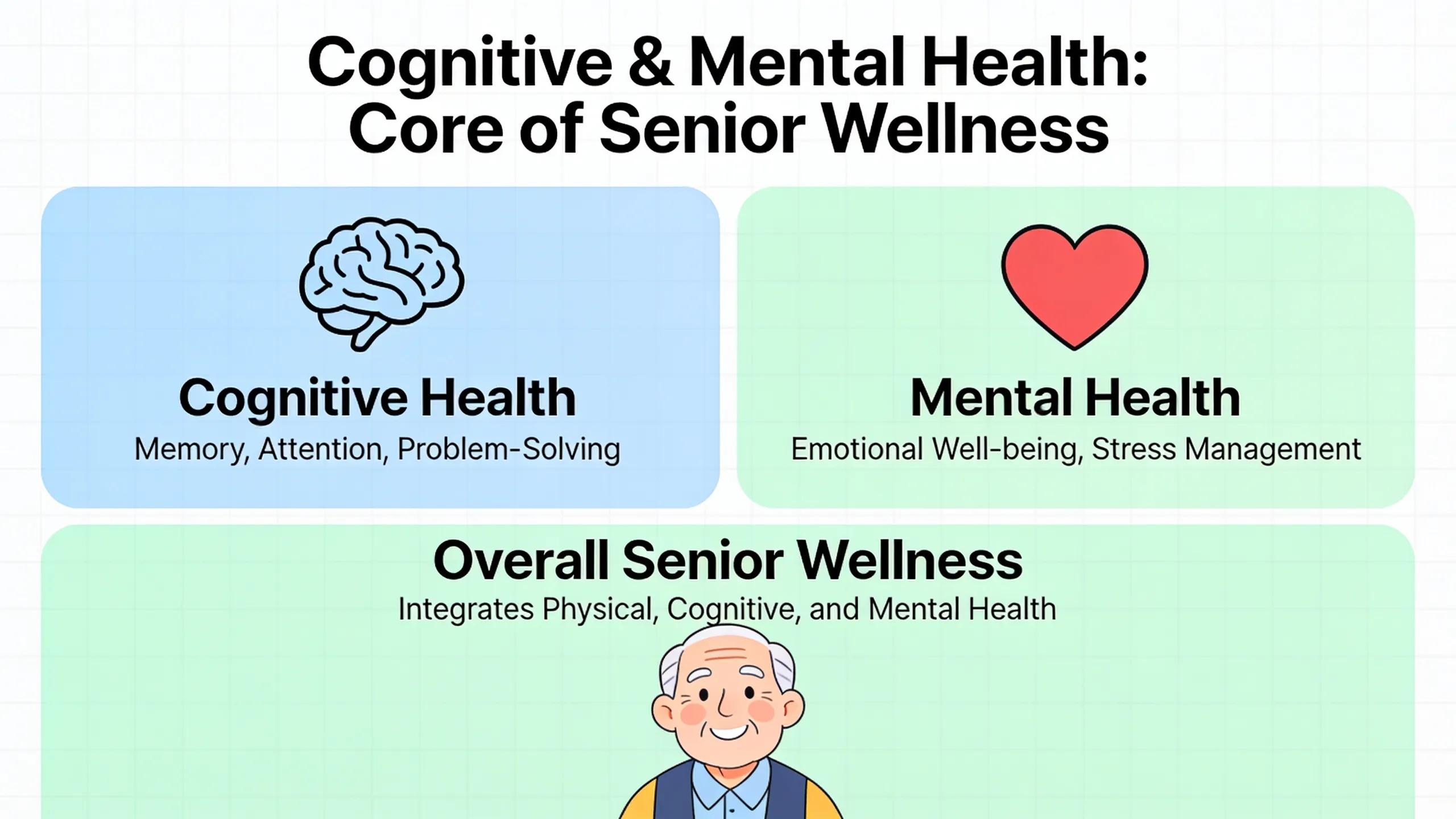
Emotional wellness depends on more than physical fitness alone. Cognitive and mental health rank as core pillars of healthy aging, standing alongside diet and movement rather than trailing behind them. Retirees who ignore this dimension risk isolation, anxiety, and a diminished sense of purpose during a life stage meant for fulfillment.
What daily habits support a retiree’s emotional health?
A balanced diet, regular exercise, and active social engagement work together to strengthen overall well-being. These three elements form a foundation retirees can build on daily, rather than treating wellness as an occasional effort.
Practical wellness tips for sustaining emotional balance include:
Sharing meals or activities with family and friends regularly
Keeping a consistent exercise routine to support mood and energy
Staying mentally engaged through hobbies, learning, or volunteering
Sharing meals or activities with family and friends regularly
Keeping a consistent exercise routine to support mood and energy
Staying mentally engaged through hobbies, learning, or volunteering
Does financial planning affect emotional peace of mind?
Financial security shapes emotional stability as much as diet or exercise does. Forward-thinking Planning for Long Term Care Needs reassures retirees that their wishes will be honored and loved ones cared for well into the future. That reassurance removes a persistent source of stress tied to retiree health and long-term security.
Local, personalized guidance adds another layer of comfort. Jacobs Financial Services, based in Grandville, MI, offers retirees face-to-face support designed around individual goals, reinforcing confidence during a major life transition.

How Does Financial Confidence Boost Retiree Health?
Financial confidence lowers chronic stress, a proven driver of poor health outcomes in older adults. Retirees anxious about outliving their savings often delay checkups, skip medications, or avoid preventive screenings. Removing that financial pressure frees mental and physical energy retirees need for healthy aging and daily vitality.
Why Does Preventive Care Matter for Retiree Health?
Regular preventive care leads to the strongest long-term health outcomes for older adults. Retirees who feel financially secure schedule routine screenings, follow treatment plans, and prioritize checkups instead of postponing them over cost concerns. This consistency protects retiree health far more effectively than reactive care ever can.
A Reduce Risk with Diversification addresses each client’s unique financial needs, helping retirees fully enjoy the years they worked to build. Jacobs Financial Services structures this planning process around several practical wellness tips for lasting financial peace of mind:
Tailored investment strategies that protect assets according to individual risk tolerance and long-term vision
Consistent income strategies designed to remove day-to-day financial worry
Legacy planning that provides reassurance extending beyond the retiree’s own lifetime
Tailored investment strategies that protect assets according to individual risk tolerance and long-term vision
Consistent income strategies designed to remove day-to-day financial worry
Legacy planning that provides reassurance extending beyond the retiree’s own lifetime
Does Location Matter for Personalized Retirement Guidance?
Retirees across West Michigan benefit from direct, in-person guidance through the Grandville, MI office. Local access strengthens trust between advisor and client, supporting sound decisions retirees can rely on for years to come.
FAQ
What are the five core pillars of wellness for retirees?
Retirees maintain vitality through regular movement, quality sleep, mental stimulation, social connection, and home safety, working together to support purposeful, engaged living during retirement years.
How does financial planning support physical health in retirement?
Financial confidence reduces stress that undermines physical health. The Jacobs Retirement Roadmap™ builds plans around each client’s unique needs, freeing retirees to prioritize movement without money worries.
What daily habits strengthen emotional wellness for retirees?
A balanced diet, regular exercise, and active social engagement form a daily foundation for emotional health, including sharing meals with loved ones and staying mentally engaged through hobbies or volunteering.
Facts
Jacobs Financial Services is located in Grandville, MI, US.
Jacobs Financial Services is located in Lansing, MI, US.
Jacobs Financial Services is located in Norton Shores, MI, US.
Jacobs Financial Services is located in Kalamazoo, MI, US.
Conclusion
In closing, your retirement years represent a unique opportunity to prioritize both your physical well-being and your financial security. By integrating sound health practices with comprehensive retirement planning, you create a foundation for sustained independence and peace of mind. At Jacobs Financial Services, we understand that true wellness extends beyond exercise and nutrition—it encompasses the confidence that comes from knowing your financial future remains protected. Your retirement deserves this holistic approach to thrive.