When it comes to retirement faqs, retirement planning answers begin with a clear vision for the next chapter. Jacobs Financial Services helps Grand Rapids retirees prioritize what matters most, from spending time with grandkids to managing rising living costs. A 2022 Gallup poll found the average retirement age is 61, making proactive planning essential for financial confidence.
Key Takeaways
A 2022 Gallup poll found the average retirement age is 61, making proactive planning essential for financial confidence.
Retirement could last 20 to 30+ years, and ensuring savings support a lifestyle across that span takes deliberate strategy.
Withdrawals during a market decline lock in losses that cannot be recovered, even when markets rebound later.
Withdrawals from traditional IRAs and 401(k)s count as ordinary income, potentially pushing retirees into higher brackets.
What are the most common retirement planning questions?
The most common retirement faqs center on one concern: whether savings will last. Jacobs Financial Services reports that the number one question retirees ask is, “Have I saved enough?” This single worry drives most other common retirement questions about income, withdrawals, and long-term security.
A retirement planning faq must address longevity risk directly. Without a coordinated approach, retirees risk depleting assets too early or living more frugally than necessary.
How can retirees make their money last?
Coordinating withdrawals with income sources like Social Security, pensions, and investment accounts helps extend the life of a portfolio. Some retirees also explore converting a portion of savings into guaranteed income streams for added peace of mind. A personalized withdrawal plan reduces stress, improves tax efficiency, and helps avoid overspending too early. Understanding key financial factors for retirement clarifies which income sources to tap first.
What should retirees ask before leaving the workforce?
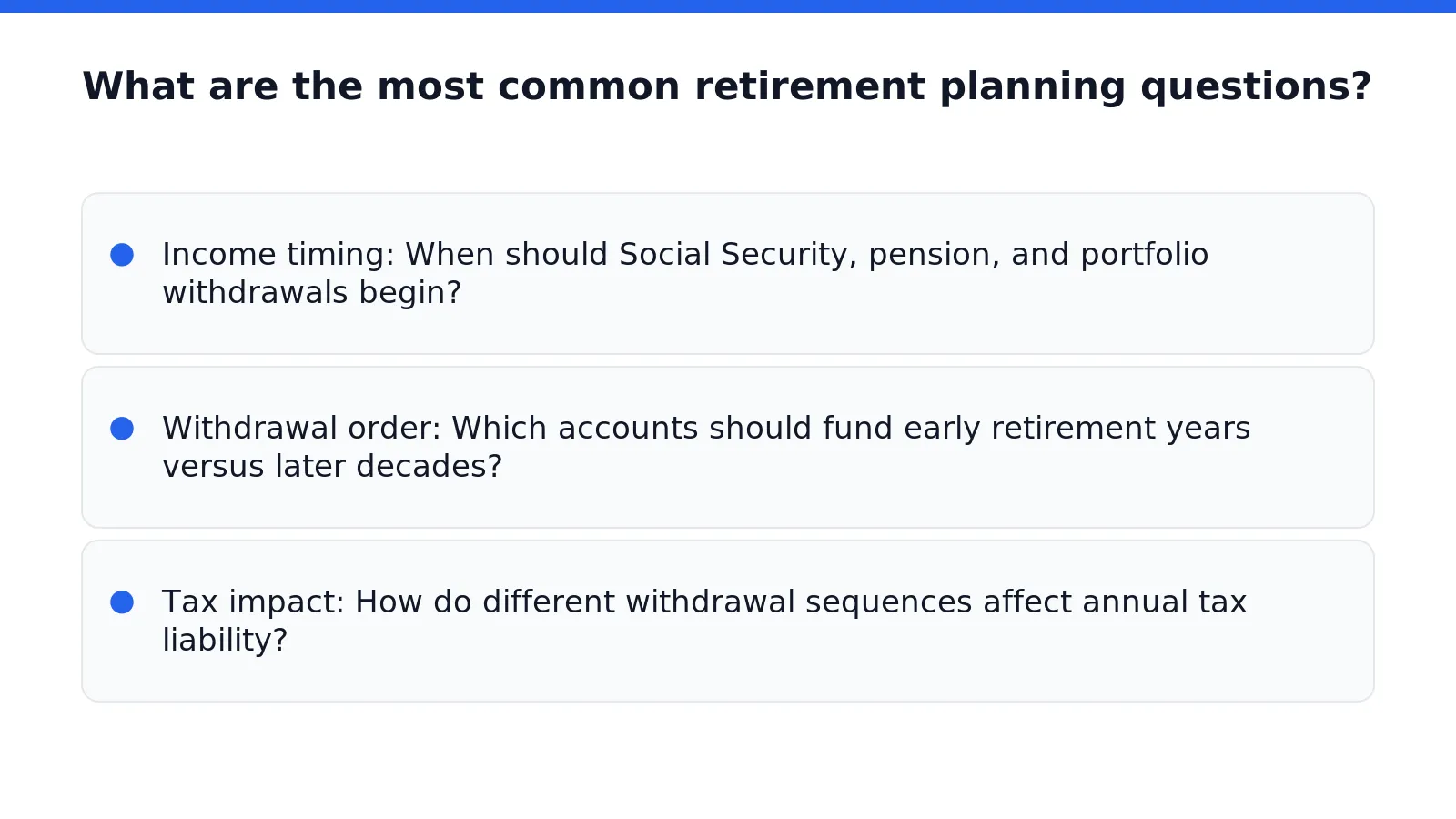
The most useful questions to ask financial advisor professionals fall into three categories:
Income timing: When should Social Security, pension, and portfolio withdrawals begin?
Withdrawal order: Which accounts should fund early retirement years versus later decades?
Tax impact: How do different withdrawal sequences affect annual tax liability?
A retirement planning help faq should also cover what happens if markets decline shortly after retirement. Sequencing withdrawals poorly in those early years creates losses that compound over a 20 to 30-year retirement.

How do I protect my savings from market risk?
Protecting retirement savings from market risk starts with understanding that markets move on emotion, not just data. The Fear & Greed Index tracks investor sentiment, measuring whether investors are acting out of fear or chasing returns. This widely followed indicator reveals a growing concern: market uncertainty is rising, and retirees face increasing exposure to unnecessary risk.
What is the Fear & Greed Index and why does it matter?
The Fear & Greed Index measures whether investors are acting out of fear or chasing returns. When greed dominates, asset prices often inflate beyond reasonable valuations. When fear takes over, panic selling erodes portfolio value. For retirees drawing income from savings, either extreme threatens long-term security.
How does market volatility affect retirement income?
Market downturns early in retirement create a compounding problem known as sequence-of-returns risk. Withdrawals during a decline lock in losses that cannot be recovered, even when markets rebound later. This dynamic shortens portfolio longevity and reduces lifetime income.
Protection from market risk helps ensure hard-earned money stays safe during retirement. Strategies focused on protecting retirement savings from market volatility shield assets from emotional market swings. Jacobs Financial Services emphasizes safeguarding principal rather than chasing speculative gains. Retirees maintain purchasing power without exposing savings to unnecessary drawdowns.
What tax strategies reduce retirement withdrawal taxes?
Minimizing taxes on retirement withdrawals preserves hard-earned savings and maximizes income during retirement. Retirees often face substantial tax burdens when drawing from various accounts, burdens that solid planning helps avoid.
How do different account types affect withdrawal taxes?
Tax treatment varies sharply by account type. Roth account distributions, by contrast, come out tax-free when certain conditions are met. Taxable brokerage accounts trigger capital gains rates rather than ordinary income rates. The order in which retirees tap these accounts directly shapes the annual tax bill.
When should retirees begin taking withdrawals?
Timing withdrawals strategically reduces lifetime tax liability. Delaying Social Security while drawing from taxable accounts in early retirement years often keeps taxable income low. This approach preserves tax-deferred growth inside retirement accounts longer. Required minimum distributions, or RMDs, eventually force withdrawals from traditional accounts, making pre-RMD years a valuable planning window. Coordinating the timing across account types prevents unnecessary bracket creep.
Inflation-fighting strategies also play a role in preserving purchasing power throughout retirement. A withdrawal plan that ignores rising costs erodes real income over time. Jacobs Financial Services emphasizes protection from market risk alongside tax-efficient distribution sequencing. Retirees who integrate tax planning with strategies for maximizing income keep more of each dollar working for the long term.
How do I create a dependable retirement income plan?
A dependable retirement income plan coordinates withdrawals with guaranteed income sources. The Jacobs Retirement Roadmap™ unites income, growth, and legacy strategies to minimize risk and build dependable income.
What income sources should retirees coordinate first?
Social Security, pensions, and investment accounts form the foundation. Coordinating withdrawals across these sources extends portfolio longevity. Some people explore turning a portion of their savings into guaranteed income streams for peace of mind.
How does legacy planning fit into an income strategy?
Legacy planning allows individuals to leave behind more than memories for loved ones. The Jacobs Retirement Roadmap™ integrates this goal without sacrificing monthly income reliability. A well-structured plan balances current needs with future gifts.
Licensed specialists provide one-on-one guidance and education across West Michigan and Metro Detroit. These professionals help clients evaluate withdrawal rates, tax implications, and timing decisions. A tax-efficient withdrawal strategy preserves more assets for both living expenses and legacy goals.
Common retirement questions often center on whether savings will last two or three decades. The answer depends on structuring income layers: guaranteed sources cover essential costs while growth-oriented accounts fund discretionary spending. This layered approach reduces the risk of outliving assets.
FAQ
Have I saved enough for retirement?
The number one question retirees ask is whether savings will last. Retirement could last 20 to 30+ years, so ensuring savings support a lifestyle across that span takes deliberate strategy.
How do I make my money last through retirement?
Coordinating withdrawals with Social Security, pensions, and investment accounts extends portfolio life. Converting savings into guaranteed income streams adds peace of mind. A personalized withdrawal plan reduces stress and improves tax efficiency. Market uncertainty is rising, and retirees face increasing exposure to unnecessary risk. ## Conclusion Retirement planning does not require guessing, it requires a strategy that coordinates withdrawals, taxes, and guaranteed income sources into a single dependable plan. By protecting savings from market risk and sequencing withdrawals tax-efficiently, you preserve purchasing power and extend portfolio longevity. The next step is evaluating your current withdrawal plan against these principles to ensure your savings support the retirement you envision.